Foundation issues can be a homeowner’s worst nightmare, leading to structural damage, safety hazards, and costly repairs. The foundation is the backbone of your home, supporting everything from the walls to the roof. Unfortunately, over time, it can suffer from shifting soil, weather changes, and natural settling, all of which can cause significant problems. Knowing the early signs of foundation damage can save you from dealing with major repairs and help you maintain the integrity of your home.
In this blog post, we’ll discuss the most common warning signs that indicate your home may need foundation repair, such as cracks in walls, uneven floors, and doors that won’t close properly. Ignoring these signs can result in more severe damage, so it’s crucial to act quickly when they appear.
What are the most common signs of foundation damage that homeowners should look out for?
Foundation damage can cause various issues that often start small but worsen over time. Here are the most common signs that your home may need foundation repair:
- Cracks in walls or ceilings: These can appear as small hairline cracks or larger, more concerning gaps.
- Uneven floors: If your floors seem to slope or have areas that feel “off balance,” this could signal foundation movement.
- Doors or windows that won’t close properly: Misaligned doors and windows often indicate that the foundation is shifting.
- Gaps between walls and ceilings/floors: As the foundation settles, gaps may form where walls meet floors or ceilings.
- Sagging crawl spaces: A sagging crawl space can indicate that the support structure beneath your home is failing.
These warning signs are not always obvious at first, but as they progress, they can lead to significant structural issues. Catching these early is crucial to avoid major repairs or even complete foundation failure.
Why do cracks in walls and ceilings indicate foundation problems, and what types of cracks should be most concerning?
Cracks in walls and ceilings are often the first noticeable sign of foundation problems. Here’s why they occur and which ones to be concerned about:
- Vertical cracks: These are often caused by normal settling. While they can be harmless, larger vertical cracks can indicate more serious issues.
- Horizontal cracks: These are more concerning as they suggest pressure from external forces, such as soil expanding against the foundation. They often require immediate attention.
- Diagonal cracks: Typically seen around door or window frames, diagonal cracks point to uneven foundation settlement. This indicates that one side of the foundation is moving more than the other.
- Stair-step cracks in brick or masonry: These are particularly alarming, as they signal that the foundation is shifting in multiple directions.
It’s important to monitor cracks for changes. If they seem to be getting larger or more numerous, it’s a strong indicator that your foundation may need professional repair. Ignoring these signs can lead to more serious structural damage over time.
How can uneven floors and sticking doors or windows be linked to foundation issues, and why should these signs not be ignored?
Uneven floors and doors or windows that stick are common signs of foundation problems. Here’s why:
- Uneven floors: Foundation shifting can cause floors to slope or develop low spots. While you may initially feel only a slight dip or slope, the problem can worsen as the foundation continues to settle.
- Sticking doors and windows: When a foundation moves, it can distort the frames of doors and windows, making them difficult to open or close. Misaligned frames often lead to gaps, allowing air or water to enter the home, which can also lead to higher energy bills.
- Warped floors or doors: In some cases, foundation damage can cause wooden elements to warp, further compounding the problem.
These issues can be more than just an annoyance. As the foundation continues to settle or shift, the structural integrity of the entire home may be at risk. Failing to address these signs early can lead to more severe foundation damage, including compromised support beams and joists, which may result in costly repairs down the road.
What are helical piles, and how do they help stabilize and repair damaged foundations?
Helical piles are an innovative solution used to stabilize foundations suffering from movement or settlement. Here’s how they work:
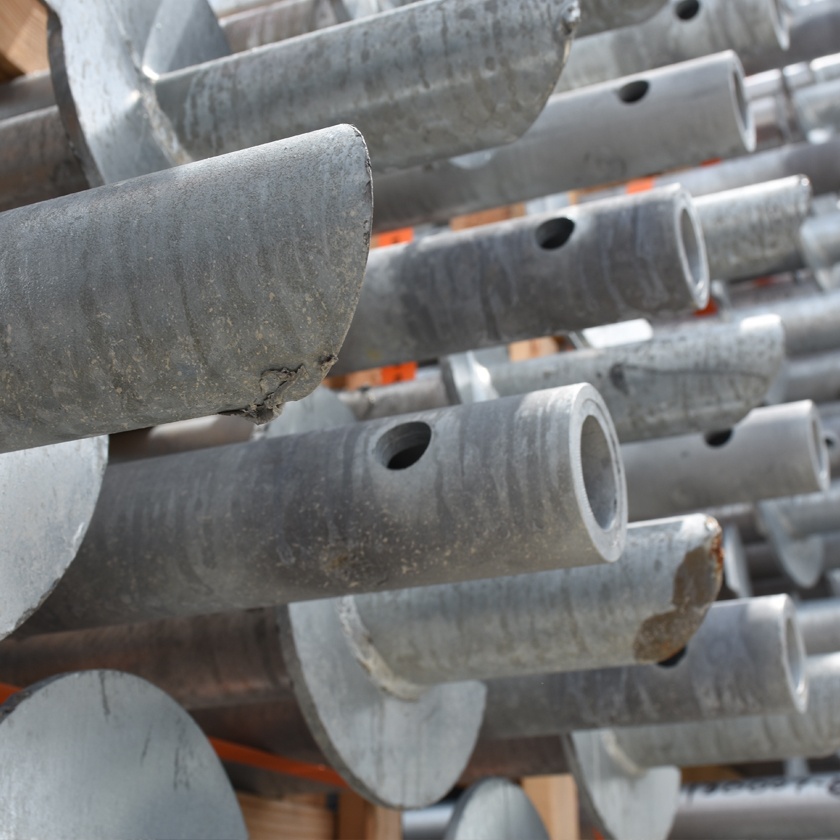
- What are helical piles?: Helical piles are long steel shafts with screw-like helices (blades) at the bottom. They are screwed into the ground until they reach a stable layer of soil or bedrock.
- How do they work?: Once the helical piles are installed beneath the foundation, they transfer the weight of the structure from unstable soil to deeper, more stable ground. This helps to halt further settlement and provides long-term stabilization.
- Why use helical piles?: They are a minimally invasive solution, requiring less excavation compared to traditional methods like concrete piers. This makes them faster to install and less disruptive to your home and landscaping.
- Customizable and adaptable: Helical piles can be used in a wide range of soil conditions and are adaptable to various types of structures, from homes to commercial buildings.
By installing helical piles, homeowners can stabilize a shifting foundation without the need for major, costly repairs, making them a popular choice for modern foundation repair.
What are the main benefits of using helical piles for foundation repair, and why are they considered a superior solution?
Helical piles offer several advantages over traditional foundation repair methods. Here are the key benefits:
- Cost-effective: While the upfront cost can vary, helical piles tend to be more affordable in the long run compared to other foundation repair methods because of their durability and the limited need for future maintenance.
- Minimally invasive: Since they require less excavation and equipment than traditional methods like underpinning or concrete piers, helical piles are less disruptive. Installation can often be completed in a few days.
- Works in all soil types: Helical piles are ideal for areas with unstable soil because they reach deeper, more stable layers beneath the surface.
- Long-lasting solution: Helical piles are made of galvanized steel, which is resistant to corrosion. This ensures that they provide lasting support, reducing the likelihood of needing further foundation repairs.
- Adaptable to various projects: Helical piles can be used in new construction as well as for repairing existing homes, making them versatile for a wide range of situations.
Because of their adaptability, cost-efficiency, and reliability, helical piles have become a preferred choice for both contractors and homeowners dealing with foundation issues.
Contact Rock Solid Foundations Today
Foundation damage is a serious concern, but recognizing the signs early—such as cracks, uneven floors, or sticking doors—can help you address issues before they escalate. Helical piles offer a durable, cost-effective, and minimally invasive solution to stabilize foundations and prevent future problems. If you notice any of the signs mentioned, consulting with a foundation repair specialist is a wise first step.