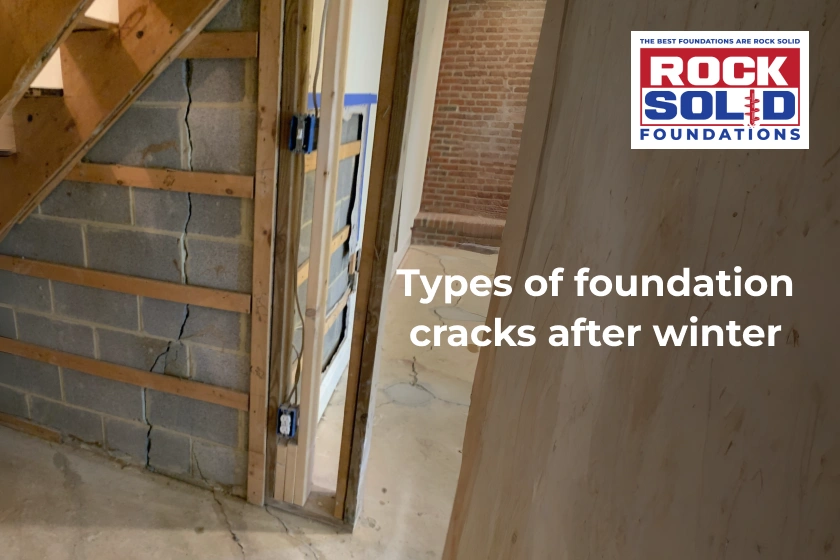
Winter can be harsh on buildings across Maryland and Delaware. As temperatures drop and rise repeatedly, the ground expands and contracts, putting immense pressure on foundations. When spring arrives, many property owners notice foundation cracks after winter that were not there before. The big question is whether these cracks are harmless or a sign you need professional foundation repair.
Understanding the difference can help you avoid unnecessary stress and prevent serious structural damage.
Why do foundation cracks appear after winter?
Winter-related foundation damage is often caused by freeze-thaw cycles. When water in the soil freezes, it expands. As it thaws, the soil contracts. This repeated movement creates pressure against foundation walls.
Key causes include soil expansion and contraction due to freezing temperatures, poor drainage around the property, hydrostatic pressure buildup, and settling or shifting soil after thaw.
These conditions are common across Maryland and Delaware, making seasonal inspections essential for both homeowners and those managing commercial foundation repair needs.
Not all cracks are created equal
One of the biggest concerns property owners have is whether a crack signals danger. The reality is that some cracks are purely cosmetic, while others indicate structural problems that require immediate attention.
Understanding the type, direction, and size of a crack is key to making the right decision.
Harmless foundation cracks you can monitor
Some cracks are normal and do not necessarily require immediate foundation repair. However, they should still be monitored over time.
-
Hairline cracks
Hairline cracks are thin, shallow cracks in concrete that typically appear as the foundation cures, usually measuring less than 1/16 inch wide. These cracks are common and often do not affect structural integrity.
-
Vertical cracks
Vertical cracks run straight up and down and are often caused by normal settling, typically appearing narrow and uniform in width. They are generally not dangerous unless they widen or allow water intrusion.
-
Shrinkage cracks
Shrinkage cracks occur as concrete dries and cures, typically appearing as small, evenly spaced cracks. These are cosmetic in nature and rarely require intervention.
Even though these cracks are not urgent, a trusted foundation repair company can evaluate them to ensure they do not worsen over time.
Warning signs: Cracks that need immediate attention
Some cracks signal serious structural issues and should not be ignored.
-
Horizontal cracks
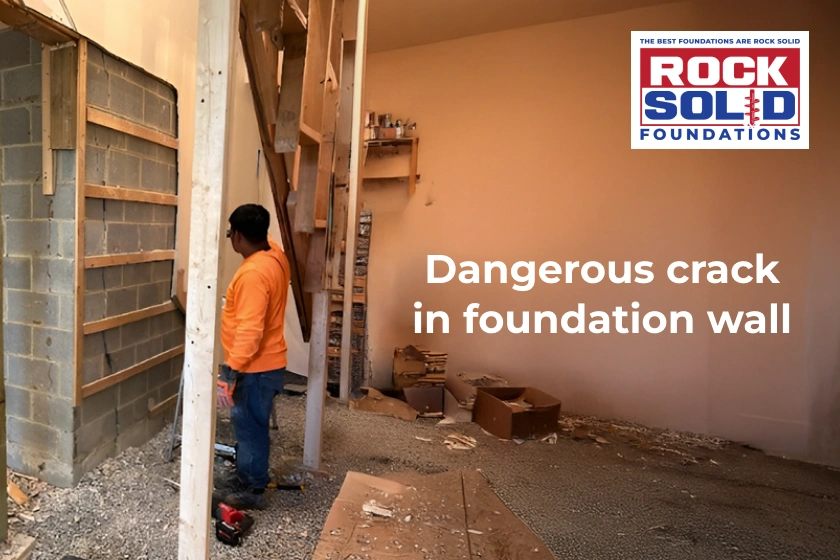
Horizontal cracks are one of the most critical warning signs of foundation damage, typically caused by excessive soil pressure and often found in basement walls. They indicate wall bowing or structural stress and typically require professional foundation repair as soon as possible.
-
Diagonal cracks
Diagonal cracks often appear at 30 to 45 degrees and are caused by uneven settling, which may indicate a shifting foundation. These cracks can worsen quickly and should be inspected by a foundation repair company.
-
Wide cracks
Wide cracks measuring more than 1/4 inch across can allow water to seep in and continue to grow over time. They are a clear sign that structural integrity may be compromised.
-
Stair-step cracks in brick or block
Stair-step cracks follow mortar lines in a stair-step pattern and are common in masonry foundations, frequently seen in both residential foundation repair cases. They are often linked to settlement or movement.
How to self-diagnose before calling a professional
Many property owners want to assess the situation before contacting a contractor. While a professional inspection is always recommended for serious concerns, here are a few ways to evaluate cracks:
- Measure the width and length of the crack
- Check if the crack is growing over time
- Look for water seepage or moisture
- Observe any doors or windows sticking
- Monitor changes in floor level
If the crack remains stable and small, it may not require immediate foundation repair. However, any signs of movement or expansion should prompt a call to a trusted foundation repair company.
What causes dangerous foundation cracks?
Understanding the root cause helps prevent future issues. Common causes include poor soil compaction during construction, improper drainage systems, tree roots affecting soil stability, excess moisture around the foundation, and heavy structural loads.
In Maryland and Delaware, fluctuating weather conditions make these issues more likely, especially after winter.
When should you call a foundation repair company?
It is better to be cautious when dealing with foundation issues. You should contact a professional if you notice cracks widening or spreading, a dangerous horizontal crack in a foundation wall, or water entering through cracks.
Bowed or uneven walls and sloping floors are also signs that immediate attention is needed. A reliable foundation repair company can provide an accurate diagnosis and recommend the right solution without unnecessary repairs.
Preventing foundation cracks after winter
While not all cracks can be avoided, you can reduce the risk with proper maintenance. Ensuring proper drainage around your property, keeping gutters and downspouts clean, maintaining consistent soil moisture levels, sealing small cracks before they worsen, and scheduling regular inspections all go a long way toward protecting your property. Preventative care is especially important for commercial properties where structural issues can impact operations and safety.
Why choose Rock Solid Foundations for foundation repair
Rock Solid Foundations understands how stressful foundation issues can be, especially after winter. Our team provides expert foundation repair, tailored to both residential and commercial foundation repair needs.
We offer comprehensive foundation inspections, crack repair and structural stabilization, basement wall reinforcement solutions, waterproofing and drainage improvements, and long-term preventative solutions.
Serving Maryland and Delaware, we bring local expertise and proven techniques to every project. As a trusted foundation repair company, we focus on honest assessments, effective solutions, and lasting results.
If you are dealing with foundation cracks after winter, do not wait for the problem to worsen.
Contact us today to schedule your professional inspection and protect your property with confidence.
FAQs
1. Are foundation cracks after winter normal?
Yes, minor cracks can occur due to freeze-thaw cycles. However, larger or horizontal cracks may require professional foundation repair.
2. How do I know if a crack is structural?
Structural cracks are usually wide, horizontal, or diagonal. A foundation repair company can confirm the severity.
3. Can small cracks turn into big problems?
Yes, even small cracks can expand over time due to moisture and soil movement, leading to costly foundation repair.
4. Do commercial buildings face the same risks?
Yes, commercial foundation repair is often needed due to heavier loads and larger structural stress.
5. How quickly should I act on foundation cracks?
If the crack is growing, wide, or horizontal, you should act immediately and contact a professional.