
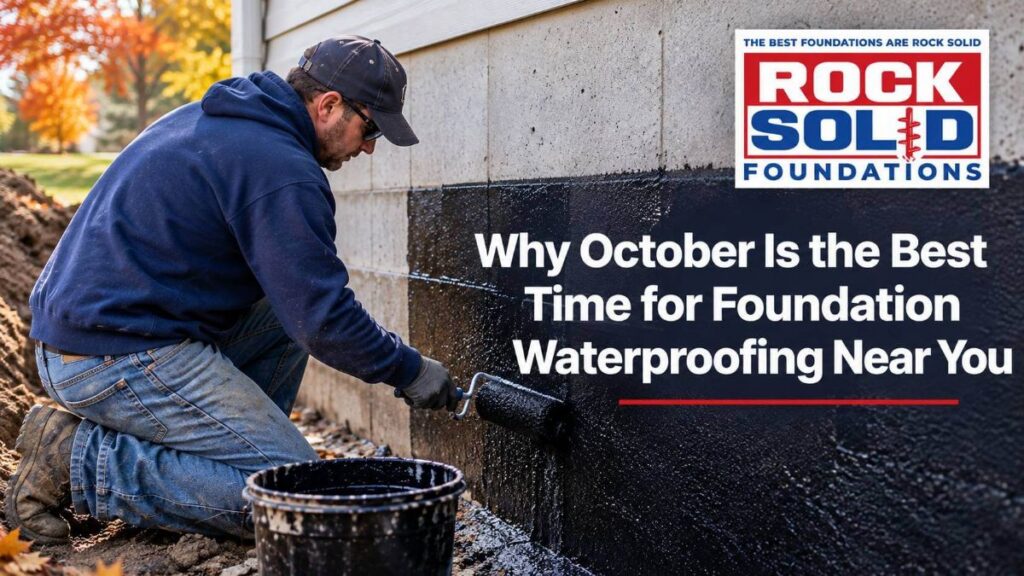
Searching for foundation waterproofing near me? Learn why October’s mild weather and workable soil make it the best time to waterproof in MD & DE.
Why October is the best time for foundation waterproofing in MD & DE
October is often the best time for foundation waterproofing because mild temperatures, workable soil, and drier stretches between storms give sealants and coatings the conditions they need to cure.
It also leaves time to close cracks and correct drainage before winter rain, snowmelt, and freeze-thaw cycles turn small leaks into larger problems.
If you have been putting off a damp corner, a hairline crack, or a puddle that keeps forming beside the house, searching for foundation waterproofing near me in October puts you ahead of winter instead of reacting to it. Waiting usually means working around frozen ground, wet soil, and a busier contractor calendar.
This guide explains:
- What October weather does for waterproofing work
- What can happen to an unprotected foundation over winter
- Signs your foundation needs attention before the first freeze
- A practical October checklist you can start this weekend
- How the common waterproofing methods compare
- How to choose a waterproofing contractor you can trust
What October weather does for waterproofing work
Waterproofing is only as good as the conditions it is installed in.
Materials have to bond to clean, dry surfaces, soil has to be workable, and water has to be redirected before the heaviest wet season arrives.
Fall checks more of those boxes than any other season in Maryland and Delaware.
Mild temperatures help materials cure
Most waterproofing coatings, membranes, and crack-sealing products list a required temperature range and surface condition on their product data sheets.
Summer heat can make some materials set too quickly, and freezing weather can keep them from curing at all.
October’s moderate days and cool nights generally fall within the range these products are designed for, which gives the installation a better chance to bond and cure properly.
Soil is workable for exterior work
Exterior waterproofing and drainage work often require digging along the foundation. In fall, the ground is usually softer than in late summer and not yet frozen like it can be in January.
That makes excavation and grading work more practical and can reduce the disruption to your yard.
Fall storms show you where water goes
A few October rains are useful information. They reveal where gutters overflow, where water pools against the house, and where dampness appears inside the basement or crawl space.
Walking your property during or right after a fall storm gives you, and your contractor, a clear picture of where the water is actually coming from.
There is still a buffer before the first freeze
Across much of Maryland’s Eastern Shore and the Delmarva Peninsula, the average first freeze arrives in late October or early November, depending on location.
Scheduling waterproofing early in the fall leaves room for evaluation, planning, and installation before freezing nights become routine.
What happens if you wait until winter
Small moisture problems rarely stay small once temperatures drop. Winter adds several pressures to a foundation that is already letting water in.
Freeze-thaw cycles widen cracks
Water expands when it freezes. When moisture works into a hairline crack and freezes overnight, it pushes the crack wider, then thaws and lets more water in the next day.
Over a Maryland and Delaware winter, that cycle can repeat many times, which is why foundation cracks often worsen in winter.
Hydrostatic pressure builds against the walls
Hydrostatic pressure is the force that saturated soil and groundwater put on a foundation wall. Winter rain and snowmelt keep the soil around your home wet for long stretches, and that pressure pushes water through any crack, joint, or gap it can find.
Correcting drainage and sealing vulnerable areas in the fall reduces how much water is waiting at the wall.
Cold weather narrows your options
Waterproofing can still be done in winter, but frozen ground makes excavation harder, and some products cannot be applied below their minimum temperature.
In many cases, the result is a temporary fix now and the full repair in spring. October lets you choose the right solution instead of the one the weather allows.
You spend more time indoors with the moisture
Basements and crawl spaces that stay damp through winter can develop musty odors, condensation, and mold concerns, right when windows are closed and you are spending more time inside.
Addressing moisture in the fall helps keep those areas drier through the months when ventilation is limited.
Signs your foundation needs waterproofing before winter
You do not need special tools to spot most early warning signs. Look for:
- Damp spots or dark patches on basement or foundation walls after rain
- Efflorescence, a white, chalky residue left behind when water moves through concrete or masonry
- Hairline cracks in walls or floors, especially ones that feel damp
- Peeling paint or bubbling coatings on basement walls
- A musty smell in the basement or crawl space
- Standing water or wet insulation in the crawl space
- Water pooling near the foundation after storms
- Gutters that overflow or downspouts that empty right beside the house
- Soil or mulch beds that slope toward the home
Signs that point to something worse than a moisture problem
- Horizontal cracks
- Walls that bow or lean
- Sloping floors
- Doors or windows that start to stick
If you notice any of these, start with a professional foundation inspection so the cause is identified before any waterproofing is applied.
Your October foundation waterproofing checklist
Before you start searching for foundation waterproofing near me, a few hours of checking in October can tell you how much help you need before winter.
Step 1: Walk the foundation after a rain
Go outside during or just after a steady rain. Note where water collects, where gutters spill over, and which areas stay wet longest. Then check the basement or crawl space for fresh dampness in the same areas.
Step 2: Clean gutters and extend downspouts
Clear leaves and debris so gutters can carry water away. Downspouts should discharge several feet from the house, ideally 5 to 10 feet, using extensions or splash blocks so water does not soak the soil beside the foundation.
Step 3: Check the grading
Soil around the house should slope away from the foundation. A common guideline is a drop of about 6 inches over the first 10 feet. Low spots, settled backfill, and mulch beds piled against the wall can all send water toward the house instead of away from it.
Step 4: Test the sump pump
If your home has a sump pump, pour a bucket of water into the pit and confirm the pump turns on, empties the pit, and shuts off. Check that the discharge line is clear and drains away from the house.
Step 5: Look inside the crawl space or basement
Use a flashlight to check walls, floors, and the crawl space for damp soil, standing water, condensation, efflorescence, or new cracks. Take dated photos so you can compare conditions later. Use a foundation inspection checklist so you can know what to look for.
Step 6: Schedule a professional evaluation
If you found active moisture, recurring dampness, or cracks you are unsure about, look for foundation waterproofing near me now, while the weather still allows a full range of solutions.

Foundation waterproofing methods explained
There is no single waterproofing method that fits every home. The right approach depends on:
- Where the water enters
- How the lot drains
- The foundation type
- Whether there is any structural damage
Drainage and grading corrections
Many moisture problems start outside the foundation.
Regrading soil, extending downspouts, and installing French drains (gravel-filled trenches with a perforated pipe that carries water away) can reduce the amount of water reaching the walls in the first place.
Exterior waterproofing
Exterior waterproofing involves excavating along the foundation, cleaning the wall, and applying a waterproof membrane or coating, often paired with drainage at the footing.
It stops water on the outside of the wall, which makes it one of the most thorough approaches, but it requires excavation and suitable weather. This is where October timing matters most.
Interior water management
Interior systems manage water that reaches the inside of the foundation. They typically collect water along the perimeter and direct it to a sump pump that discharges it away from the home.
Interior systems do not stop water from reaching the wall, but they can keep it from collecting in living or storage areas.
Many homeowners searching for basement waterproofing near me end up with a combination of interior and exterior measures.
Crack sealing
Isolated, non-structural cracks can often be sealed to stop water from entering through that specific point.
Crack sealing works best when the crack is not actively moving and the surrounding drainage has been addressed.
If you are searching for foundation crack repair near me because the same crack keeps leaking or reopening, the cause should be evaluated before it is sealed again.
Crawl space moisture protection
Homes on crawl spaces face moisture from the ground below and humid air from outside.
Vapor barriers, encapsulation, and drainage improvements help control that moisture, which is usually what homeowners need when they search for crawl space waterproofing near me. If your crawl space shows standing water, sagging framing, or damaged supports, a crawl space foundation repair evaluation is the right starting point.
How to choose foundation waterproofing companies near me
The companies that show up when you search for foundation waterproofing companies near me do not all approach the problem the same way.
Some sell one product for every home.
Others look at drainage, soil, and the structure before recommending anything. A few questions help separate them:
- Are they licensed? In Maryland, home improvement contractors must hold an MHIC license, and you can verify a license number with the state before signing.
- How do they find the source of the water? A good evaluation looks at gutters, grading, soil, and the foundation itself, not just the wet spot on the wall.
- Do they address drainage? Waterproofing without correcting drainage often treats the symptom.
- Can they recognize structural issues? Foundation waterproofing contractors near me who also understand foundation repair can tell when a crack is a moisture issue and when it signals movement.
- Will they put the scope in writing? You should know exactly what is being installed, where, and why.
Comparing foundation waterproofing services near me on these points, rather than price alone, helps you avoid paying twice for a repair that did not address the cause.
Why waterproofing and foundation repair often go together
Water is one of the most common contributors to foundation problems. Saturated soil can soften and shift, freeze-thaw cycles widen cracks, and long-term moisture can deteriorate concrete over time.
Repairing a foundation without managing the water around it can leave the same conditions in place.
That is why many homeowners search for foundation repair and waterproofing near me as one project.
When a single team evaluates both, the waterproofing plan can account for any foundation repair that is needed, and the repair is protected by better water control afterward.
When to call a professional in MD and DE
Rock Solid Foundations is a veteran-owned company with more than 30 years of combined experience serving homeowners throughout Maryland and Delaware, including Edgewater, Severna Park, Arnold, Annapolis, and the Eastern Shore. Our team evaluates drainage, soil conditions, and the foundation itself before recommending a plan.
If you are looking for foundation waterproofing near me this fall, October is the time to act. Fix the gutters and grading you can handle yourself, and get a professional evaluation for recurring moisture, cracks, or anything that looks like movement.
Call 443-666-ROCK (443-666-7625) or request a free on-site evaluation anywhere in our Maryland and Delaware service areas.
Frequently Asked Questions About Why October Is the Best Time for Foundation Waterproofing in Maryland
What time of year is best for foundation repair?
Fall is often the best time for foundation repair in Maryland and Delaware. Moderate temperatures and workable soil support excavation, drainage work, and material curing, and finishing before winter keeps freeze-thaw cycles from making damage worse. That said, structural problems should not wait for a particular season. If you notice active movement or significant cracking, schedule an evaluation right away.
What is the best foundation waterproofing method?
The best method depends on where water is entering and why. Exterior waterproofing stops water on the outside of the wall and is one of the most thorough options, while interior drainage systems with a sump pump manage water that reaches the inside. Many homes also need drainage and grading corrections. A professional evaluation identifies the source so the method fits the problem.
How much does it cost to waterproof a basement?
Cost depends on the method, the size and depth of the foundation, how much excavation is needed, the extent of the water problem, site access, and whether drainage or structural repairs are part of the project. Simple fixes such as downspout extensions or regrading cost far less than full exterior waterproofing. A free on-site evaluation is the most reliable way to get a cost based on your home, and financing through GreenSky may be available, subject to credit approval.
When should you waterproof a basement?
Waterproof a basement as soon as you see signs of water, such as damp walls, efflorescence, musty odors, or puddles after rain. For planned work, early fall is ideal because materials cure well, the soil is workable, and the job can be finished before winter. Waterproofing during new construction or before finishing a basement is also a smart time, since the walls are easier to access.
Can foundation waterproofing be done in winter?
Yes, some waterproofing work can be done in winter, especially interior systems and certain crack repairs. Frozen ground can make exterior excavation difficult, and many products have minimum application temperatures. If you have active leaks, it is still worth calling in winter, but planned exterior work is usually easier in fall.
What foundation repair solutions work best against freeze-thaw damage?
The most effective approach combines keeping water away from the foundation with repairing any existing damage. Drainage corrections, grading, and downspout extensions reduce how much water reaches the walls, while sealing cracks and waterproofing vulnerable areas limit how much water can freeze inside them. If freeze-thaw cycles have already caused movement, structural repair may be needed first.
How do I choose foundation waterproofing contractors near me?
Look for a licensed contractor who evaluates the source of the water before recommending a solution. In Maryland, verify the contractor’s MHIC license, ask how they assess drainage and grading, and get the scope of work in writing. A contractor who also handles foundation repair can tell whether a crack is a moisture issue or a sign of structural movement.