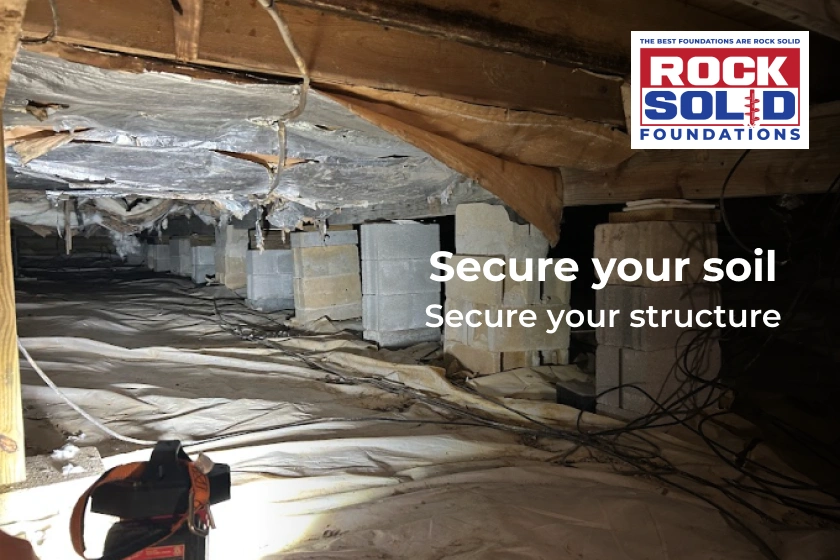
Soil erosion around your home’s foundation is more than just a landscaping issue. Over time, it can expose footings, create structural instability, and increase the risk of water intrusion. Left unaddressed, erosion often leads to costly foundation repair and long-term damage.
Understanding why erosion occurs and how to prevent and fix it can protect both residential and commercial structures. Below is a practical, step-by-step guide to identifying, repairing, and preventing soil erosion around your foundation.
What Causes Soil Erosion Around Foundations?
Soil erosion typically occurs when water, gravity, and poor drainage combine to gradually remove supporting soil around the structure.
Common causes include:
- Improper yard grading that slopes toward the house
- Clogged or short downspouts that discharge water near the foundation
- Heavy rainfall or flooding
- Expansive clay soils that shrink and swell
- Poor landscaping practices
- Broken underground drainage lines
When soil washes away, voids can form beneath slabs or footings. Over time, this weakens structural support and increases the need for foundation repair.
Warning Signs of Soil Erosion Damage
Early detection is critical. A timely foundation inspection can prevent minor soil loss from becoming a major structural issue.
Look for:
- Exposed foundation footings
- Gaps between soil and foundation walls
- Cracks in exterior brick or interior drywall
- Uneven or sloping floors
- Water pooling near the base of the home
- Basement moisture or crawl space dampness
If these signs appear, it may indicate that erosion is already affecting structural stability. Scheduling a professional foundation inspection helps determine whether erosion has compromised load-bearing elements.
How to Repair Soil Erosion Around Your Foundation
Repairing erosion involves more than simply adding soil. The solution must stabilize the area and address the root cause of the problem.
1. Regrade the Soil Properly
Proper grading ensures water flows away from the structure.
- Soil should slope away from the foundation at least 6 inches over the first 10 feet
- Use compacted fill dirt, not loose topsoil
- Avoid piling soil too high against siding or brick
Compaction is critical. Poorly compacted soil can settle, causing erosion and increasing the likelihood of future foundation repair.
2. Extend Downspouts and Improve Drainage
Water control is the single most important step in preventing erosion.
- Install downspout extensions at least 5–10 feet from the home
- Consider French drains for chronic drainage issues
- Ensure gutters are clean and functioning properly
Proper drainage reduces hydrostatic pressure on foundation walls, helping prevent cracking and structural stress.
3. Install Erosion Control Solutions
For areas prone to washout:
- Use gravel borders along foundation perimeters
- Install retaining walls if the property is sloped
- Add erosion control fabric beneath landscaping beds
- Plant deep-root vegetation to hold soil in place
Stabilizing soil reduces long-term movement and decreases the need for costly foundation repair later.
4. Address Structural Damage If Present
If erosion has already caused cracks, settlement, or shifting, structural intervention may be required.
This can include:
- Pier installation for stabilization
- Slab lifting
- Crack repair and sealing
- Structural reinforcement
In larger properties, commercial foundation repair may be necessary to address deeper soil displacement and load-bearing concerns.
Preventing Soil Erosion Long-Term
Prevention is always more cost-effective than structural repair. Regular maintenance significantly reduces the risk of soil displacement.
Conduct Regular Foundation Inspections
Scheduling a periodic foundation inspection allows professionals to:
- Evaluate grading and drainage performance
- Identify early cracks or settlement
- Check moisture levels
- Recommend preventative corrections
Both residential and commercial property owners benefit from consistent monitoring. Commercial foundation repair projects, in particular, can become expensive if erosion goes unnoticed.
Maintain Consistent Soil Moisture
In regions with expansive clay soils, extreme drying can cause shrinkage and foundation movement.
Preventative measures include:
- Installing soaker hoses during drought
- Avoiding overwatering near the foundation
- Maintaining consistent moisture levels around the perimeter
Balanced moisture helps prevent soil contraction and expansion cycles that lead to foundation repair needs.
Protect During Heavy Rainfall
After significant storms:
- Inspect soil levels around the home
- Check for pooling water
- Verify that downspouts are functioning
- Look for newly exposed foundation areas
Prompt corrective action minimizes structural impact.
Residential vs Commercial Considerations
While the principles of erosion control are similar, commercial properties often face:
- Larger structural loads
- Complex drainage systems
- Extensive paved surfaces
- Deeper foundation systems
Because of these factors, commercial foundation repair requires specialized assessment and engineering oversight. Early intervention helps prevent operational disruptions and structural liabilities.
Why choose us?
Rock Solid Foundations specializes in comprehensive foundation repair solutions designed to address both the symptoms and root causes of soil erosion. Our team provides detailed foundation inspection services to accurately assess structural conditions and soil stability, and to recommend solutions.
Our services include:
- Residential foundation repair
- Commercial foundation repair
- Structural crack repair
- Pier and underpinning systems
- Drainage correction and grading solutions
- Preventative foundation inspection programs
As an experienced foundation repair company, we focus on long-term structural performance rather than temporary fixes. Every project begins with a thorough evaluation to ensure repairs are precise, durable, and engineered for stability.
Whether you need minor stabilization or full commercial foundation repair, our team delivers reliable solutions designed to protect your property for years to come.
Schedule your foundation inspection today and take proactive steps to safeguard your investment.
FAQs
1. How does soil erosion affect foundation repair needs?
Soil erosion removes structural support from beneath footings and slabs. This can cause cracks, settlement, and uneven floors, increasing the need for foundation repair if left unaddressed.
2. How often should I schedule a foundation inspection?
It is recommended to schedule a foundation inspection every few years or immediately after major storms, flooding, or visible cracking.
3. Is commercial foundation repair different from residential repair?
Yes. Commercial foundation repair often involves larger structural loads, deeper foundations, and engineered stabilization systems.
4. Can landscaping prevent soil erosion?
Yes. Proper grading, drainage systems, gravel borders, and deep-root vegetation help stabilize soil and reduce erosion risk.
5. When should I contact a foundation repair company?
If you notice exposed footings, foundation cracks, uneven floors, or recurring water pooling, it is wise to consult a professional foundation repair company for evaluation.