Your home’s foundation carries the weight of the entire structure, yet it often receives the least attention until visible problems begin to surface. Foundation damage rarely appears overnight. Instead, it develops gradually as a result of moisture imbalance, soil movement, drainage issues, and unnoticed structural stress. When ignored, these small issues can escalate into costly foundation repair projects that disrupt daily life and compromise long-term property value.
Proactive foundation maintenance focuses on prevention rather than correction. By understanding the factors that affect foundation stability and responding early to warning signs, homeowners can significantly extend the lifespan of their foundation and reduce the likelihood of major structural damage.
Manage water and drainage effectively
Water control is one of the most important elements of foundation maintenance. Excess moisture around the foundation increases pressure on walls and weakens the supporting soil. Over time, this pressure can lead to cracking, shifting, and settlement.
Homeowners should ensure that roof runoff is directed safely away from the home. Gutters must remain clean and functional, while downspouts should extend several feet from the foundation. The soil surrounding the structure should slope gently away to prevent water from pooling near the foundation walls.
Common drainage-related issues to watch for include:
- Standing water near the foundation after rainfall
- Soil erosion around the base of the home
- Water stains or dampness along foundation walls
Addressing drainage problems early is critical to reducing long-term foundation stress and limiting the need for professional foundation repair.
Maintain consistent soil moisture levels
Soil behavior directly impacts foundation performance. When soil dries out excessively, it shrinks and pulls away from the foundation, reducing support. When soil becomes overly saturated, it expands and places pressure against foundation walls. These repeated cycles of expansion and contraction are a leading cause of foundation movement.
Maintaining balanced soil moisture is especially important during seasonal shifts in weather. During dry periods, light, even watering along the foundation perimeter helps prevent excessive soil shrinkage. At the same time, overwatering should be avoided, as it creates unstable conditions beneath the structure.
Consistent soil moisture reduces stress on the foundation and helps maintain structural alignment throughout the year.
Perform regular foundation checks
Routine visual checks help homeowners identify early signs of foundation issues. While these checks do not replace a professional foundation inspection, they help catch small issues before they worsen.
During routine observation, homeowners should look for:
- New or widening cracks in foundation walls
- Changes in floor level or uneven surfaces
- Doors or windows that stick or shift alignment
Interior signs, such as drywall cracks or gaps near trim, can also indicate foundation movement. When these changes appear or worsen over time, scheduling a professional foundation inspection is strongly recommended.
Address minor cracks without delay
Not all foundation cracks indicate serious structural failure, but ignoring them increases risk. Small cracks can allow water intrusion, accelerating deterioration and weakening the foundation internally. Over time, moisture intrusion may cause corrosion of reinforcing materials and additional cracking.
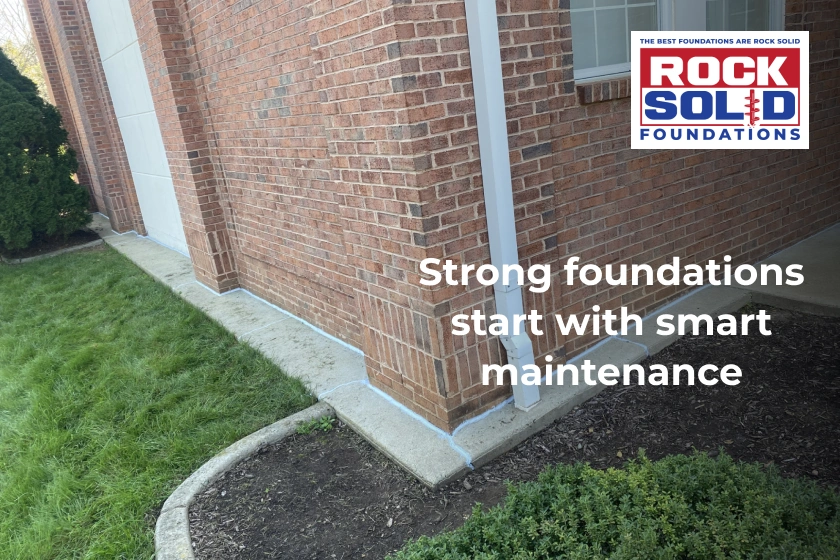
Sealing minor cracks early helps protect the foundation from moisture damage. Just as important is monitoring crack behavior. If cracks continue to expand, change direction, or appear in multiple areas, professional evaluation becomes necessary to determine whether foundation repair is required.
Early action is far more cost-effective than waiting until damage becomes extensive.
Be mindful of landscaping choices
Landscaping can either protect or harm your foundation, depending on its design. Trees and large shrubs planted too close to the home may draw moisture from the soil unevenly, causing differential settlement. Root systems can also exert pressure on foundation walls as they grow.
Best practices include planting large vegetation a safe distance from the structure and selecting shallow-root plants in areas near the foundation. Mulch should be used carefully to avoid trapping moisture against foundation surfaces.
Thoughtful landscaping supports soil stability and reduces unnecessary foundation stress.
Monitor plumbing systems below the home
Plumbing leaks beneath the home are a common but often overlooked cause of foundation damage. Continuous moisture from leaking pipes weakens soil support and contributes to settlement over time.
Warning signs of plumbing-related foundation issues may include unexplained increases in water bills, damp areas near the foundation, or persistent mold growth. Addressing plumbing issues promptly helps prevent moisture-related foundation damage that could otherwise require a foundation repair company.
Respond quickly to interior structural changes
Interior changes are often early indicators of foundation movement. Uneven floors, gaps between walls and ceilings, or misaligned doors should never be dismissed as cosmetic issues.
These symptoms suggest uneven foundation support and should be evaluated as soon as possible. An early response limits structural damage and preserves the home’s overall safety and integrity.
Why choose us

Are you confident your foundation is protected against long-term structural damage?
Rock Solid Foundations is a trusted foundation repair company, serving Maryland and Delaware, and providing professional foundation inspection, preventive maintenance, and structural repair services across our service areas, including surrounding communities and nearby regions.
Our team specializes in crack stabilization, drainage correction, soil-related foundation issues, and long-lasting foundation repair solutions tailored to local conditions.
With advanced diagnostic tools and proven repair methods, we help homeowners protect their investment and maintain structural stability for years to come.
Schedule your professional foundation inspection today and take control of your home’s foundation health.
FAQs
1. How often should a foundation inspection be scheduled?
A foundation inspection is recommended every one to two years or immediately if cracks, uneven floors, or sticking doors appear. Regular inspections help detect problems early and reduce repair costs.
2. Can foundation damage occur without visible signs?
Yes. Many foundation issues develop below ground before visible symptoms appear. This makes routine monitoring and professional inspections essential.
3. Does foundation maintenance apply to newer homes?
Newer homes are not immune to foundation problems. Soil conditions, drainage issues, and environmental factors can affect foundations at any stage.
4. How does soil type affect foundation stability?
Expansive soils respond strongly to changes in moisture, increasing the risk of foundation movement. Proper moisture management is crucial in these conditions.
5. When should I contact a foundation repair company?
Contact a foundation repair company if you notice persistent cracks, structural changes, water intrusion, or uneven flooring. Early evaluation prevents further damage.