01
Initial Conversation
We start by discussing what you have noticed in the basement, how long it has been there, and whether it has changed.
Rock Solid Foundations provides foundation underpinning for homeowners across Maryland and Delaware. When soil beneath your home shifts, compresses, or loses its ability to support the structure, the foundation can begin to settle unevenly. Cracks, sloping floors, and sticking doors may be the first signs that the ground below is no longer providing reliable foundation support.
Our foundation underpinning service focuses on identifying the cause of the movement and reinforcing the existing foundation where additional structural support is needed. Our foundation service team evaluates the foundation, soil, and drainage conditions before recommending repairs, so the solution fits what your home actually needs.
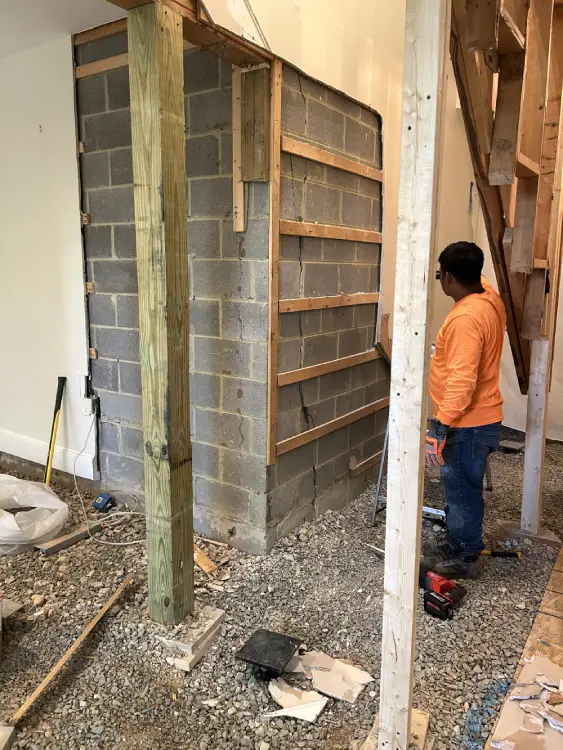
A basement wall bows when the sideways pressure from the soil behind it is greater than the strength of the wall. Block walls tend to bend at the mortar joints and often form a horizontal crack near mid-height. Poured concrete walls may show a smoother curve or a lean at the top. Common sources of that pressure include:
Bowing starts small and is easy to overlook in a finished or crowded basement.
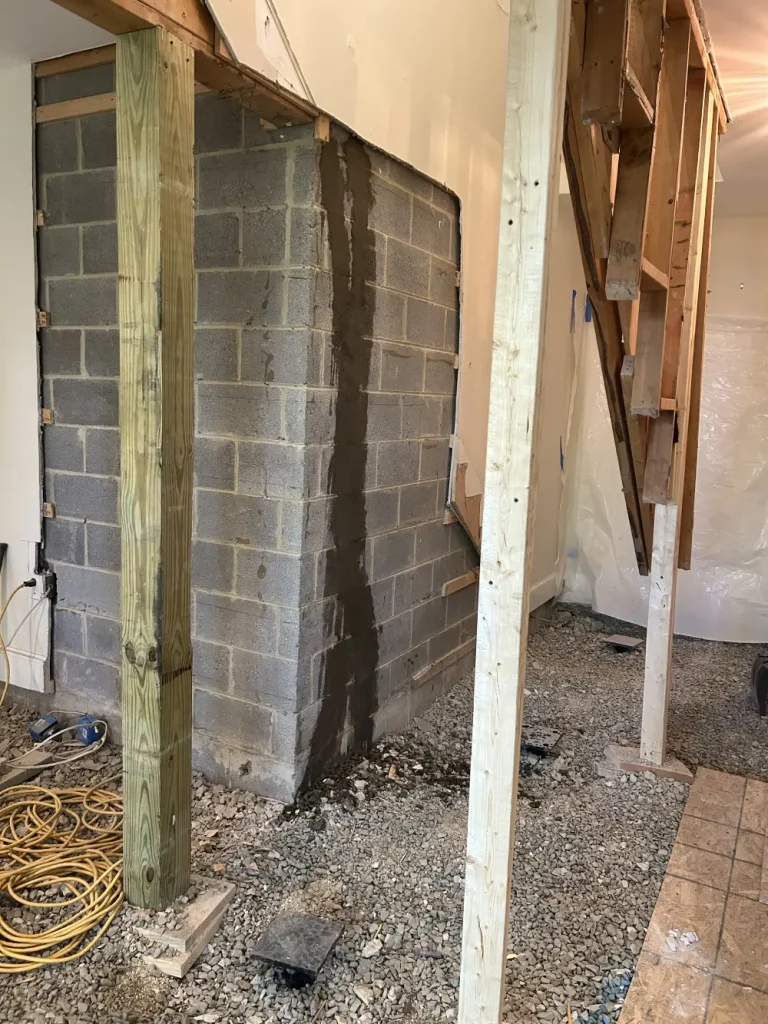
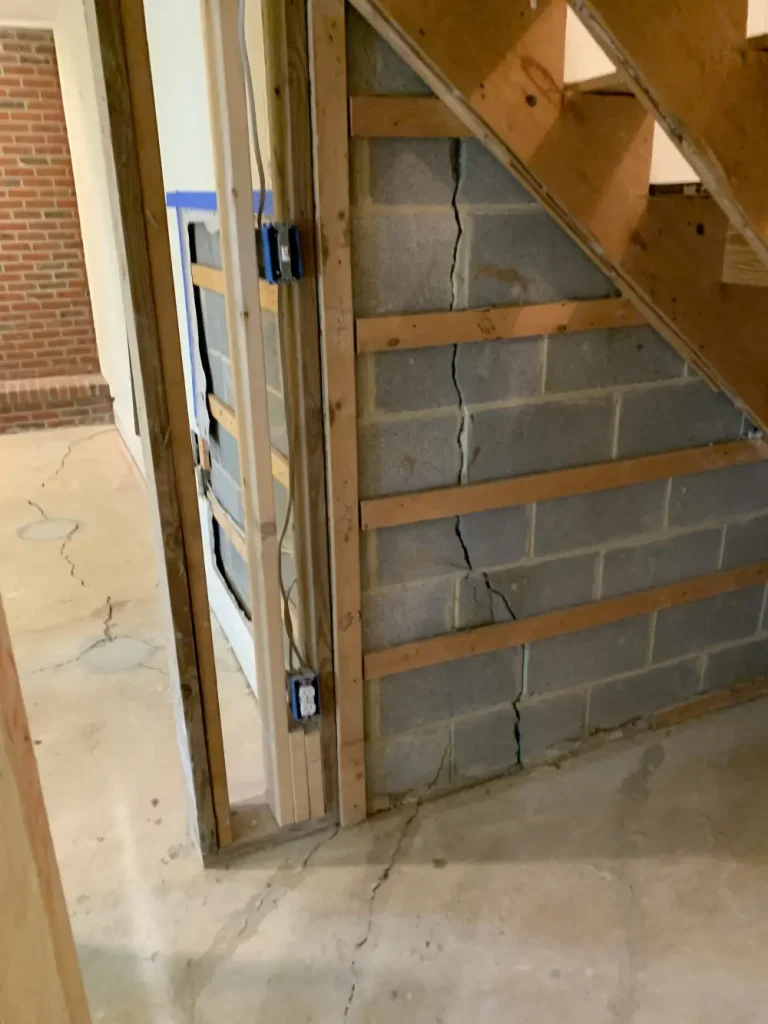
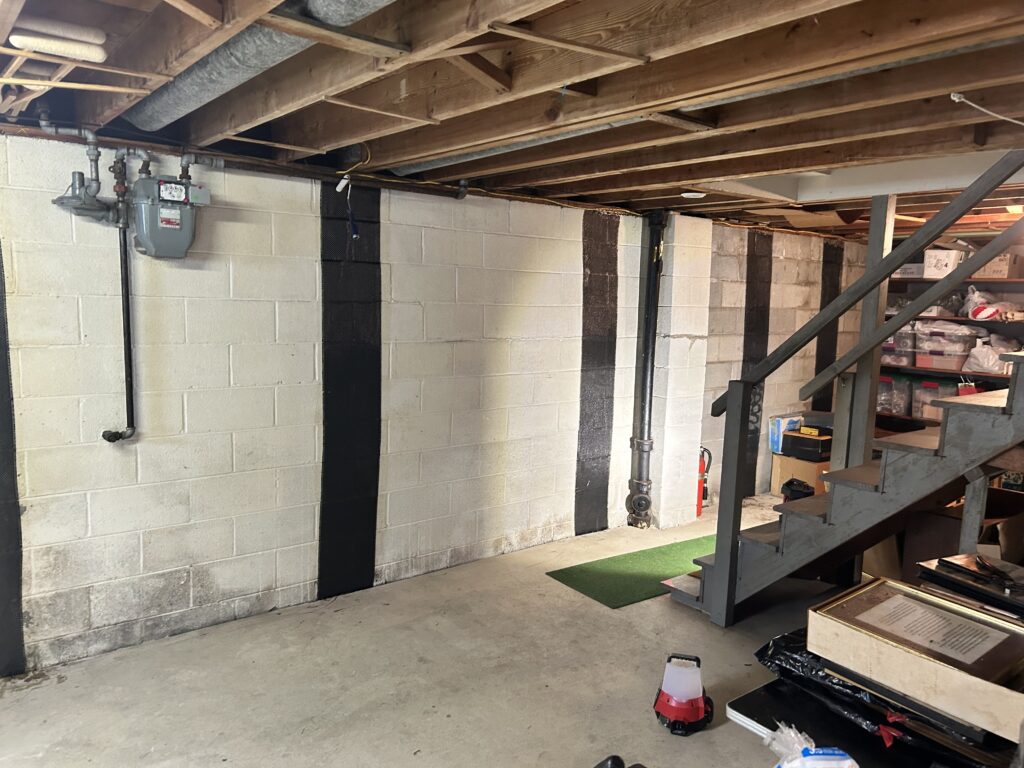
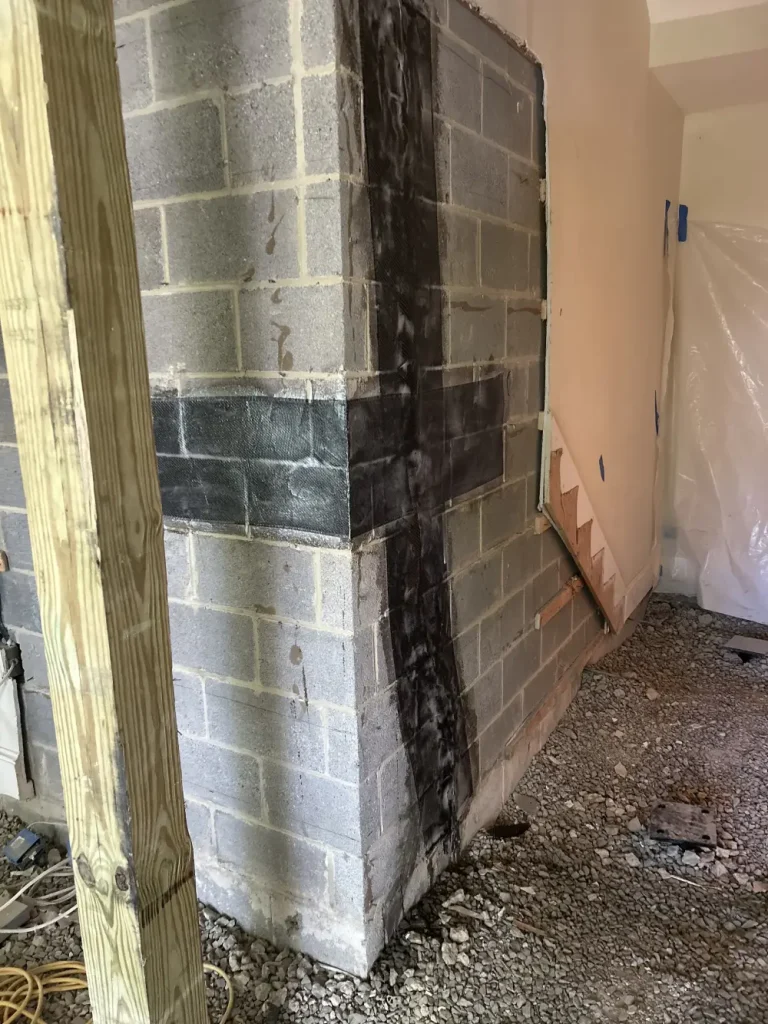
Addressing a bowing wall early, with a method matched to its condition, helps protect the structure and keeps more repair options available.
Homeowners across Maryland and Delaware rely on us for careful evaluations and wall repairs matched to the actual condition of the home.
Our team brings more than 30 years of combined experience evaluating foundation, soil, drainage, and structural conditions.
We measure and document the wall before recommending a method, so the repair matches what the wall actually needs.
As a veteran-owned company, we operate with integrity, accountability, and dependable service.
We follow a clear process so you understand the condition of your wall and the reason for each recommendation.
We start by discussing what you have noticed in the basement, how long it has been there, and whether it has changed.
Our team measures how far the wall has moved inward, usually at the point of maximum bow. We document the crack pattern, the condition of the block or concrete, and any water entry, then review the grading, gutters, and drainage around the home. A wall with an even bow and intact blocks is in a different situation than a wall with the same bow plus crumbling or displaced blocks.
We explain what we found in plain terms and outline the repair options that fit the conditions. Depending on the wall, the plan may include:
Bowing wall repair lasts longer when the source of the pressure is fixed too. Downspout extensions, French drains, regrading, and foundation sealing help move water away from the wall so the soil behind it carries less load.
Our crew completes the approved work and reviews the finished repair with you, along with any drainage steps that help protect it.
Wall pressure, drainage, and soil movement are often connected, so the right solution for your home may involve more than one service. Along with bowing wall repair, our team helps homeowners across Maryland and Delaware with the following related services:
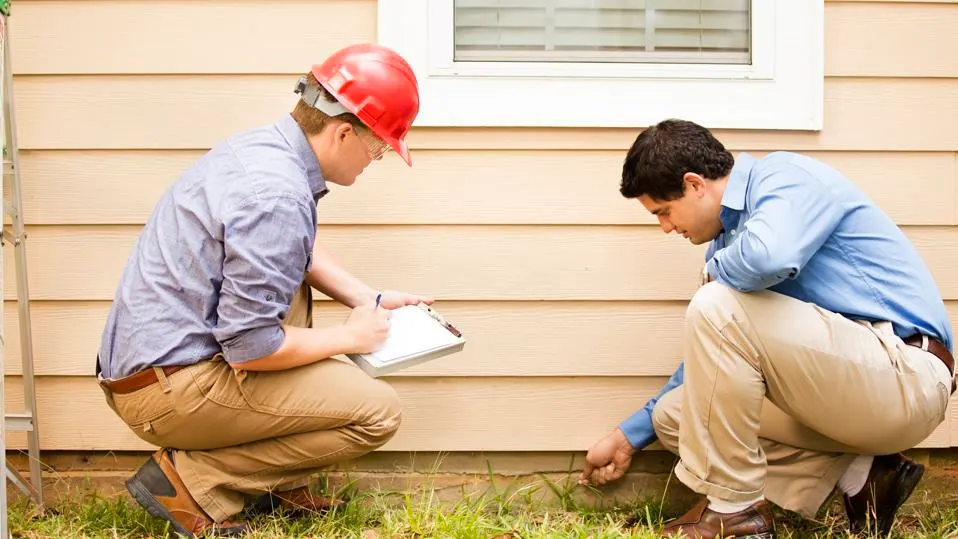
Residential Foundation Repair
Cracks, settlement, and shifting soil can affect more than one part of a foundation. Explore our residential foundation repair services to see how we evaluate and restore stable support for the whole home.
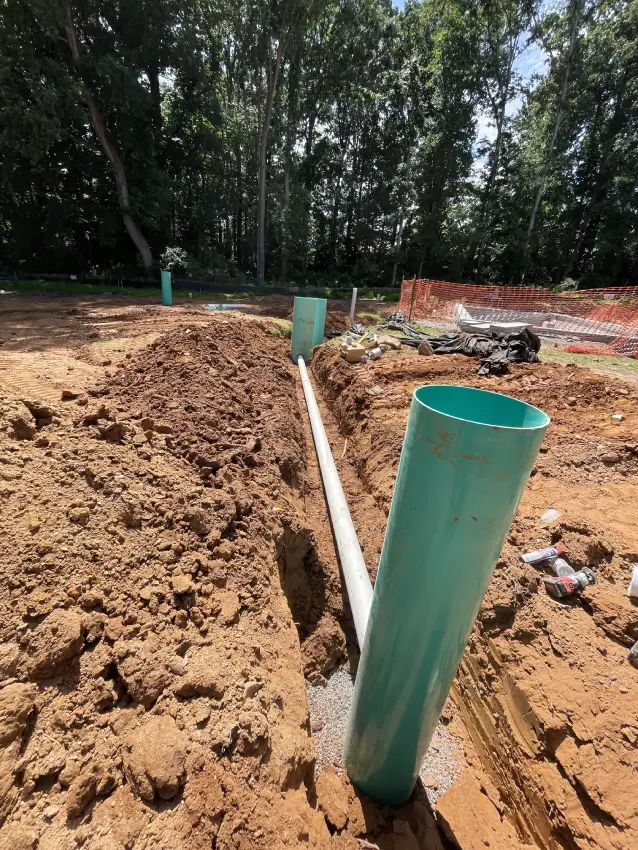
Drainage Solutions
Saturated soil is one of the main causes of bowing walls. Our residential drainage solutions redirect water away from the foundation through French drains, downspout extensions, and grading improvements.
Foundation Inspection
Not sure if the crack in your basement wall is structural? Schedule a professional foundation inspection to get a clear picture of your foundation’s condition before deciding on repairs.
Basement walls bowing repair cost depends on how far the wall has moved, the repair method required, the length and height of the wall, and the access inside and outside the home. Interior reinforcement and full excavation sit at very different price points, so we provide pricing after an on-site evaluation rather than a flat quote. If repairs are recommended, financing is available through GreenSky, subject to credit approval. You can review the details on our financing page.
In most cases, yes. Walls with minor or moderate movement can often be stabilized in place, and some systems can move a wall back toward plumb over time. Walls with severe movement or damaged masonry may need excavation and rebuilding. The right approach depends on what the evaluation reveals about the wall and the soil behind it.
It depends on your policy and the cause of the damage. Many homeowners policies exclude damage from gradual soil pressure, settlement, or groundwater, while damage from certain sudden events may be covered. Because coverage varies, review your policy and speak with your insurer to understand what applies to your situation.
A bowing wall does not automatically rule out a home, but it should be evaluated before you commit. Ask for the wall to be measured, find out whether it has been repaired before and whether that repair is documented, and get a repair estimate you can factor into your offer. Talk with your real estate agent about using the inspection period to have a foundation contractor or structural engineer review the wall.
There is no single number that applies to every wall. Industry guidance often treats about 2 inches of inward movement as a point of serious concern. Even so, a smaller bow with a deep horizontal crack or crumbling blocks can be more urgent than a larger bow on an intact wall. Movement that is speeding up from one season to the next calls for prompt attention.
Bowing wall repair is not a do-it-yourself project. Reinforcement has to be sized and placed for the pressure on the wall, and anchors and braces must be installed to specification. A wrong repair can leave the wall still moving behind a cosmetic fix. While you arrange an evaluation, you can help by keeping gutters clear and downspouts extended away from the foundation.
We provide bowing basement walls repair for homeowners throughout Maryland and Delaware. In Anne Arundel County, we serve Annapolis, Arnold, Crownsville, Davidsonville, Edgewater, Riva, and Severna Park. On Maryland’s Eastern Shore, we serve Centreville, Queenstown, and Stevensville.
If a basement wall in your home is cracking, leaning, or bowing inward, Rock Solid Foundations can measure the movement, identify the cause, and recommend a practical repair.
Call 443-666-ROCK to request a free on-site foundation evaluation.